

Our use cases
Discover some of our use cases


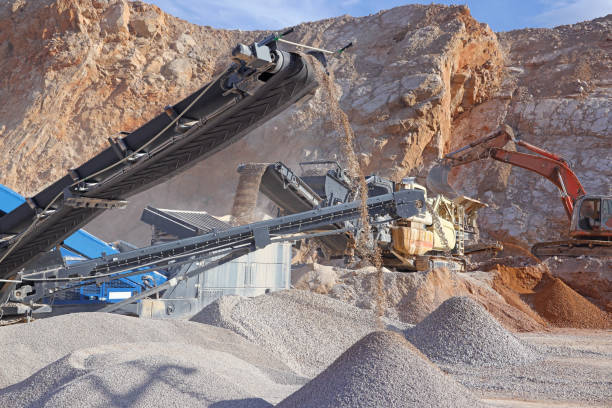
The challenge
Grinding accounts for nearly half of the site’s electricity consumption.
Constraints
Production hours are limited during the day due to noise restrictions.
Flexibilities
The grinder can speed up or slow down production and feed a buffer silo.
Results
12% savings on the final electricity bill.
Our approach
- Time constraints and production windows are set directly in the software.
- Our platform identifies the optimal operating hours while meeting daily and weekly tonnage targets.
- The production manager generates measurable electricity savings without disrupting production.

The challenge
Melting furnaces that operate between 8 and 24 hours per day, with significant overconsumption during start-up.
Constraints
Strong operational constraints and a machine load rate above 95%.
Flexibilities
Weekly planning of all melting operations with a 3 MW furnace, the first melt of which is particularly energy-intensive.
Results
20% gains thanks to optimized scheduling of melting operations.
Our approach
- A technical study to identify scheduling flexibilities aligned with the plant’s challenges and operating costs, including:
- Optimization of the consumption profile
- Leveraging excess capacity on certain machines
- Anticipation and management of grid stress days
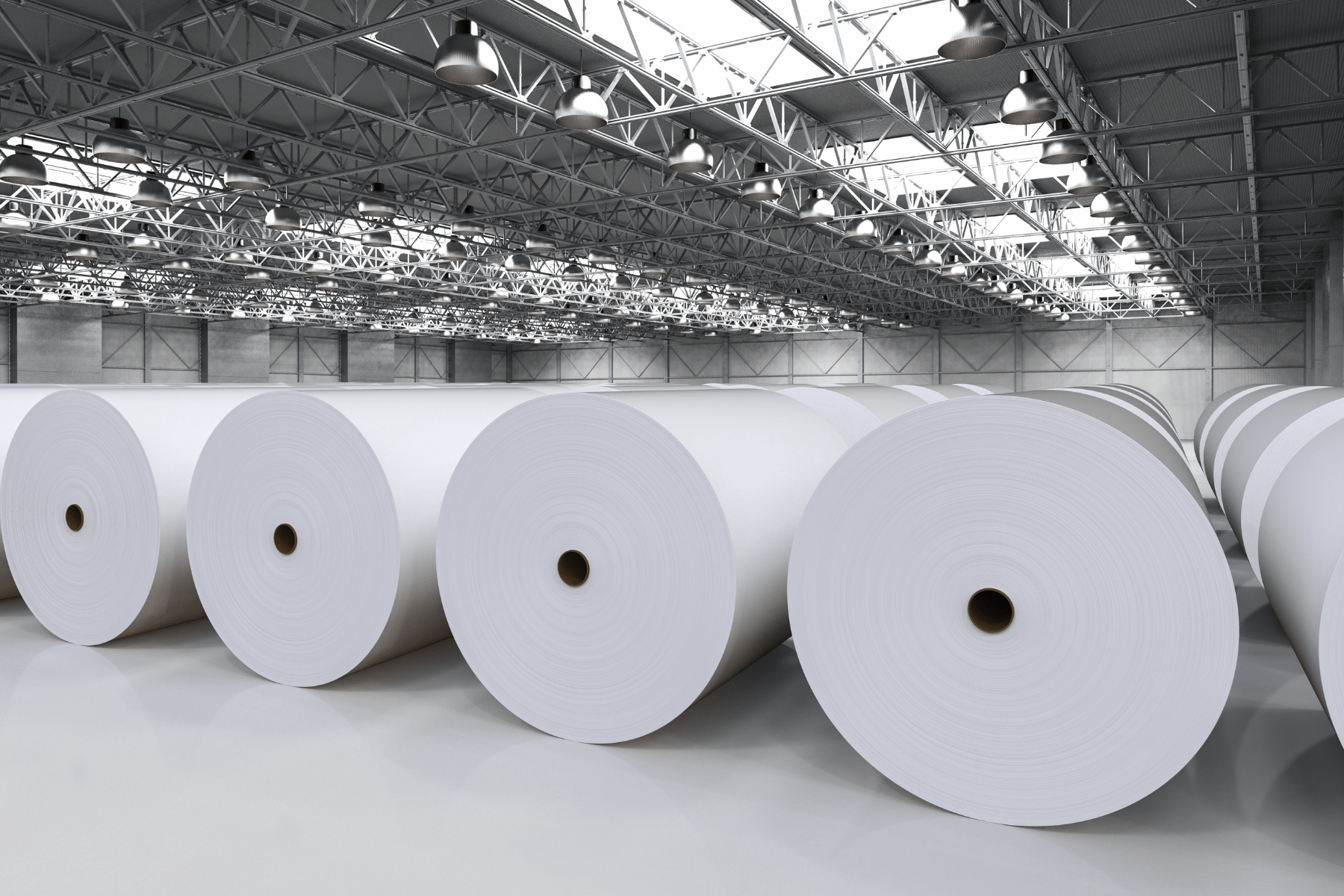
The challenge
Lack of real-time visibility to adjust short-cycle batch processes (50–80 min).
Constraints
The silo filling rate must constantly remain between 30% and 90%.
Flexibilities
Silo restarts can be advanced or delayed (5 to 40 minutes), several times a day, to generate savings. This also applies to maintenance operations.
Results
7% reduction in the electricity bill.
Our approach
With HIGHCAST, operators are fully autonomous in adjusting batch process settings while respecting all production constraints.

For an energy manager, effectively managing consumption and identifying reliable ways to optimize reduction and protect the bill are daily challenges, often limited by the operational complexity of workshops and electricity contracts.
After optimizing the contract and reducing consumption through energy efficiency and process optimization, flexibility becomes a key factor in exceeding the ceiling reached, activating new ways to reduce bills, and uniting teams around a common project.
HIGHCAST provides a direct response by offering a unified and actionable view of processes, whether they are batch, continuous, or buffer-based.
The solution highlights real sources of flexibility—without disrupting production—by automatically integrating industrial constraints, operating histories, energy needs, and margins of maneuver validated with technical teams.
Highcast anticipates periods of high prices, proposes the best management scenarios, calculates expected savings, and makes trade-offs clear to management.
Thanks to HIGHCAST, energy managers can transform complex data into simple decisions, secure the site's energy performance, sustainably reduce electricity costs, empower teams to take responsibility for production electricity costs, and contribute to the company's environmental objectives, all with an intuitive, reliable tool designed for the field.

For a production manager, the priority is clear: ensure continuity of operations, maintain production rates, meet customer commitments, and ensure workshop safety.
HIGHCAST fits naturally into this approach by offering energy optimization that is fully aligned with industrial requirements. The solution analyzes real-world constraints—cycle times, machine capacities, operational sequences, buffer stock levels, quality requirements—in order to identify only those control levers that are compatible with production.
HIGHCAST allows you to visualize, for each line or process, the risk-free flexibility windows, possible adjustments (modulation, anticipation, optimal sequencing), and the impact on production costs.
The tool then becomes a reliable decision-making aid: it helps absorb electricity price increases while ensuring planning stability, operational safety, and customer satisfaction.
With HIGHCAST, energy performance becomes an operational asset, supporting robust, controlled, and more resilient production.

For manufacturers operating batch processes, HIGHCAST offers a unique approach that enables intelligent planning of each production sequence while controlling energy costs.
The solution models all batch parameters: minimum and maximum phase durations, dependencies between stages, operational and technical constraints, incompressible times, and equipment-specific flexibility margins.
Based on this data, HIGHCAST automatically generates an optimized schedule that takes into account future electricity prices, system alerts (peak hours, network signals, ENEDIS/RTE constraints), and production targets.
The user can see at a glance in the “real-time costs” view the ideal launch windows, the possibilities for shifting or grouping cycles, and the associated gains.
This orchestration not only reduces costs, but also lowers the carbon footprint by favoring periods of high renewable availability.
By integrating HIGHCAST, industrial sites transform a rigid batch process into an agile, data-driven process aligned with economic and energy challenges.

For sites with stable and continuous processes, HIGHCAST provides particularly valuable energy management capabilities.
The solution analyzes the power demand and associated operational constraints: incompressible operating ranges, technical thresholds to be respected, thermal or mechanical requirements, and limited modulation margins.
Based on these parameters, HIGHCAST identifies optimization levers that are accessible even in a process with little flexibility: fine load adjustments, synchronization with price signals, anticipation of costly periods, management of auxiliary or non-critical consumption, and opportunities for load shedding without impacting production.
Thanks to this approach, a stable process—traditionally perceived as difficult to optimize—becomes a controllable energy item, where every kWh is valued.
Operation after operation, HIGHCAST thus makes it possible to sustainably reduce electricity costs, improve budget predictability, and contribute to energy performance objectives, without compromising the stability and continuity of the process.

For industries with buffer stock between two production stages, HIGHCAST transforms this waiting area into flexibility, a real lever for optimizing electricity costs.
The solution converts storage capacity into production time. Acceptable minimum and maximum levels, filling and emptying speeds, and upstream and downstream synchronization constraints are all ways of adapting production to market signals.
By analyzing these parameters in relation to electricity market signals (spot prices, system alerts, periods of grid tension), HIGHCAST offers intelligent management of the production-storage combination: increasing throughput when energy is cheaper, slowing down or stabilizing when prices rise, or even anticipating price peaks thanks to optimal stock levels.
This allows manufacturers to visualize possible scenarios and the associated gains, while ensuring continuity of flow and product quality.
With HIGHCAST, buffer stock becomes a strategic tool for reducing costs and increasing the site's energy resilience.