

Sommaire
1. A batch process
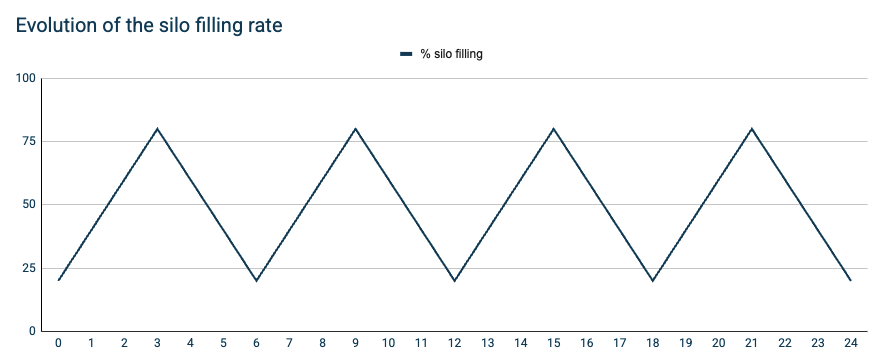
The site studied had a classic batch cycle: filling → emptying → filling.
The cycle times are short (can be reduced to a few minutes depending on the speed), the dependence of this cycle on the rest of the line is very strong, and the risk associated with a power fault for this line is very high (operating loss, machine breakage, etc.). All these arguments are all arguments for not activating flexibility at this point, and yet.
When we analyzed the history of the last four weeks, the repeatability of the cycles seemed to confirm the site's intuition: same durations, same sequences, same consumption profile.
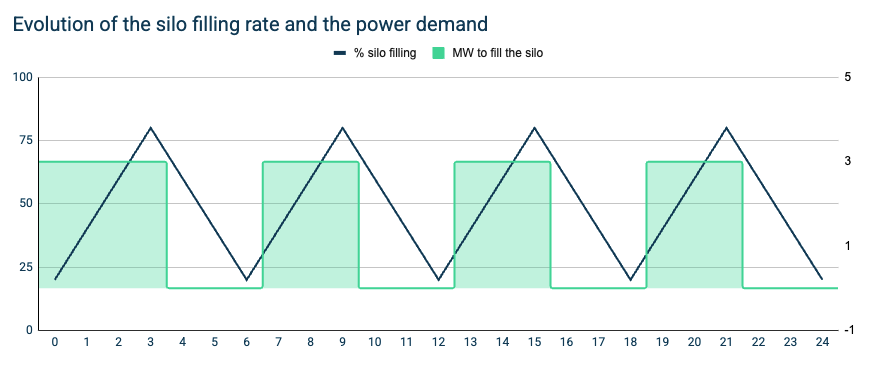
The power called oscillates in terms of frequency depending on the direction of the slope.
The main constraint to be respected is to always maintaining the occupancy rate between 2 filling thresholds.
2. The flexibility windows hidden in cycles
By analysing in greater detail:
- The exact durations of each stage
- Marginal variations between cycles
- Quality margins
- Thermal phases
- The heating and maintenance zones
- Cleanings
- Operator constraints
- The deadlines for getting started again
... we identified several time lag opportunities, impossible to perceive by observing only the overall load curve of the site or the machine's sub-counter.
Two elements in particular caught our attention:
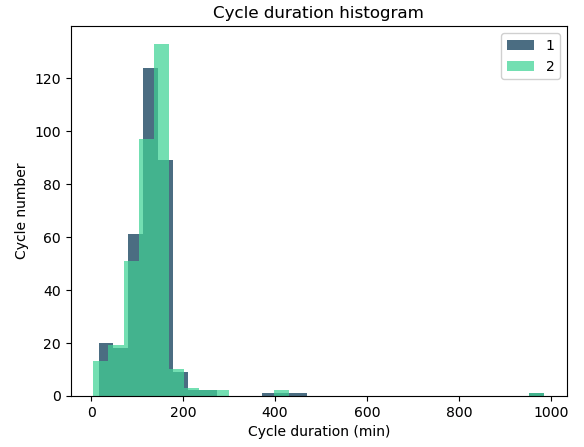
Filling phase: 1 hour 15 minutes on average but lasts 2 minutes to 3 hours
Sufficient natural variability (depending on the needs of the next machine) to allow adjustment of the launch.
Draining phase: 50 min on average
Previously ignored because it was perceived as “purely logistical”.
However, these small differences create significant room for manoeuvre over several hours per day.
3. Finding the best times to start or finish a batch
Thanks to our HIGHCAST planning engine, powered by SPOT forecast prices, all the components of your contract and your process constraints, we simulated different scenarios to adjust:
- The time of the filling phases
- The progress or delay of certain emptying phases
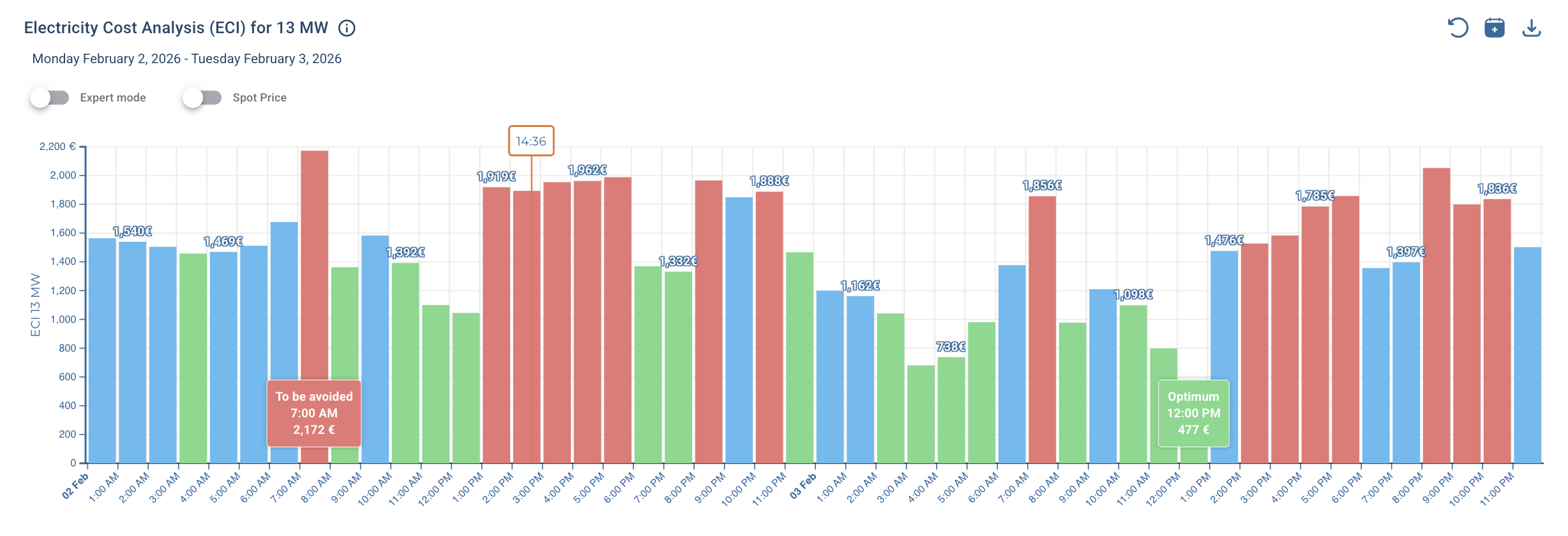
Each column shows the change in the ICE (Electricity Cost Index) of the factory.
Low price zones are immediately visible (green zones), as are high price zones (red zones).
SPOT influences this variation but not only that, everything will depend on the components of your electricity contracts and their influence.
Result: several major optimization windows
- Of launch ranges allowing to absorb the reaction in a low price zone
- Of cleaning lag ranges making it possible to limit consumption in high price ranges

Based on the characteristics of the operation (filling time, emptying time, power demand, etc.) and the technical and operational constraints (high and low threshold, quality constraints, availability of teams), HIGHCAST calculates the cost, the risks avoided and the savings associated with two types of actions:
- Offset, lengthened or shortened filling
- Offset, extended or shortened emptying
The filling areas to be favored are immediately visible (green areas), as are the areas where emptying should be preferred (red areas).
4. Result: €10,000 in savings in 2 months... without affecting the recipe or the process
By simply adjusting as you go:
- The fillings
- Oil changes
The site created:
€10,000 in savings in two months
0 impact on production,
0 change of process parameters,
0 operational risk
This case is all the more interesting because it concerns only two levers:
- The natural temporal flexibility of the process
- The lag of ancillary operations
In most batch sites, other levers exist:
- Energy variations between references produced
- Optimization of thermal phases
- Batch scheduling
- Fine management of cleaning cycles
- Anticipation of maintenance
- Impact of staffing and team schedules
5. Batch process ≠ lack of flexibility
It's a fairly common myth:
“the batch is fixed, so there's nothing to optimize.”
The reality observed on the ground is almost always the opposite:
- Cycles seem rigid... but have hidden margins
- The durations seem fixed... but vary more than you think
- Operations seem incompressible... but their placement over time may change
- The teams think they are optimizing... but without fine data, it's impossible to confirm
To effectively optimize a batch process, you must have:
- Detailed operational data
- Sufficient granularity (minute by minute)
- A precise understanding of industrial constraints
- A tool capable of simulating hundreds of scenarios and identifying the best one
That is exactly what HIGHAST offers.
Beyond pure optimization, HIGHCAST is becoming a real tool for coordinating energy and production.
The platform establishes a common language, offers a shared and objective vision of electricity costs, and makes it possible to concretely anticipate the energy impact of operational choices.
The production teams thus become fully actors in electrical production costs : they can adjust, over time and when the conditions are right, the organization of cycles, without ever compromising industrial goals, quality or speed.
HIGHCAST transforms energy complexity into simple, relevant and actionable decisions, at the right time and continuously.
Do you want to know the potential of your batch cycles?
We support manufacturers in identifying, modeling and activating their sources of savings without changing the recipe, without changing the process, without taking risks.
👉 Contact us for a personalized study