

Sommaire
Why this risk is critical today
Historically, electricity was a relatively stable cost item, managed mainly through contracts.
This approach is no longer sufficient.
Industrial sites now have to contend with:
- high hourly price variability,
- multi-component contracts (market, ARENH, TURPE, penalties),
- frequent network signals,
- industrial constraints that limit the ability to react immediately.
In this context, producing without knowing the real cost of electricity at the time it is consumed is like making blind decisions about a strategic input.
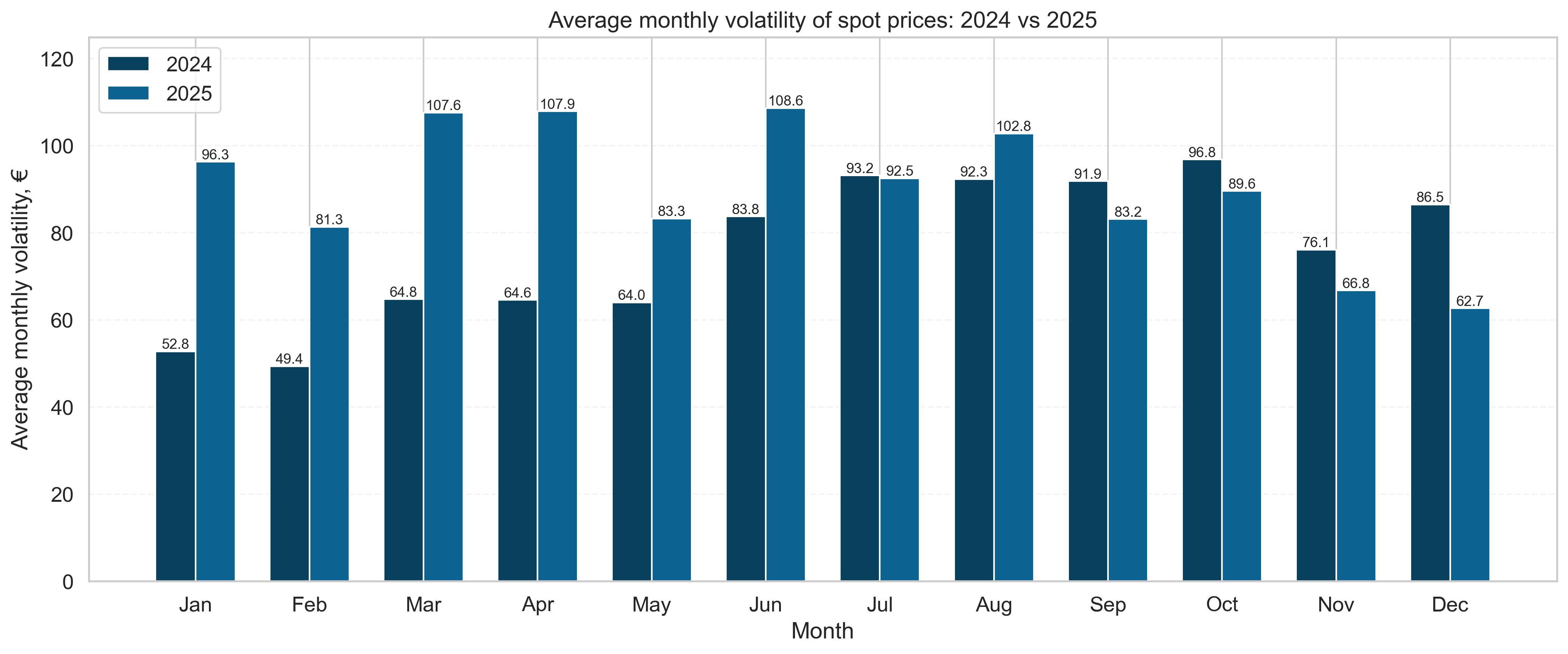
As an indication, the SPOT market alone has an average annual volatility of €91/day, an increase of 19% compared to 2024.
Risk 1: Economically suboptimal production decisions
Without visibility on costs:
- Energy-intensive phases are launched regardless of market conditions.
- Flexible processes are used as if they were not flexible.
- Decisions are made based on habit rather than economic criteria.
For equivalent production volumes, several production organizations are possible, with electricity costs that can vary significantly.
The lack of economic insight prevents the most efficient scenario from being identified.
Direct impact: structural, invisible, and repeated cost overruns.
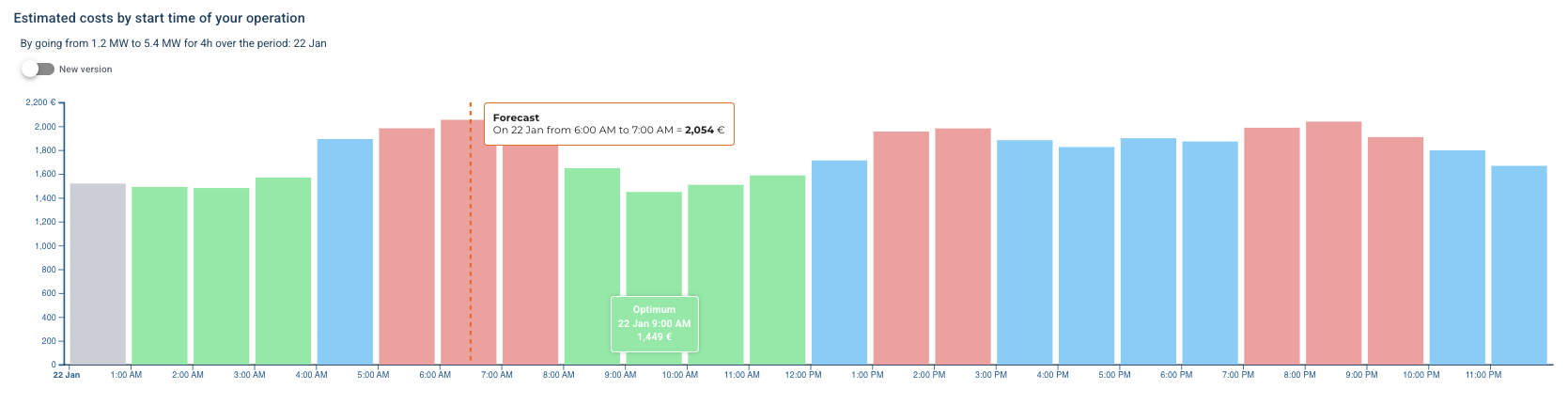
In this situation, running the same operation at 2 a.m. or 5 p.m. triples the total electricity cost associated with operating this machine.
Risk #2: Increased exposure to price spikes and network tensions
Reading the bill after the fact does not allow you to:
- anticipate periods of high prices,
- activate corrective measures in time,
- avoid penalties or exceeding tariff indicators.
Sites are therefore subject to market fluctuations rather than incorporating them into their management strategies.
Direct impact: uncontrolled costs and loss of foresight.
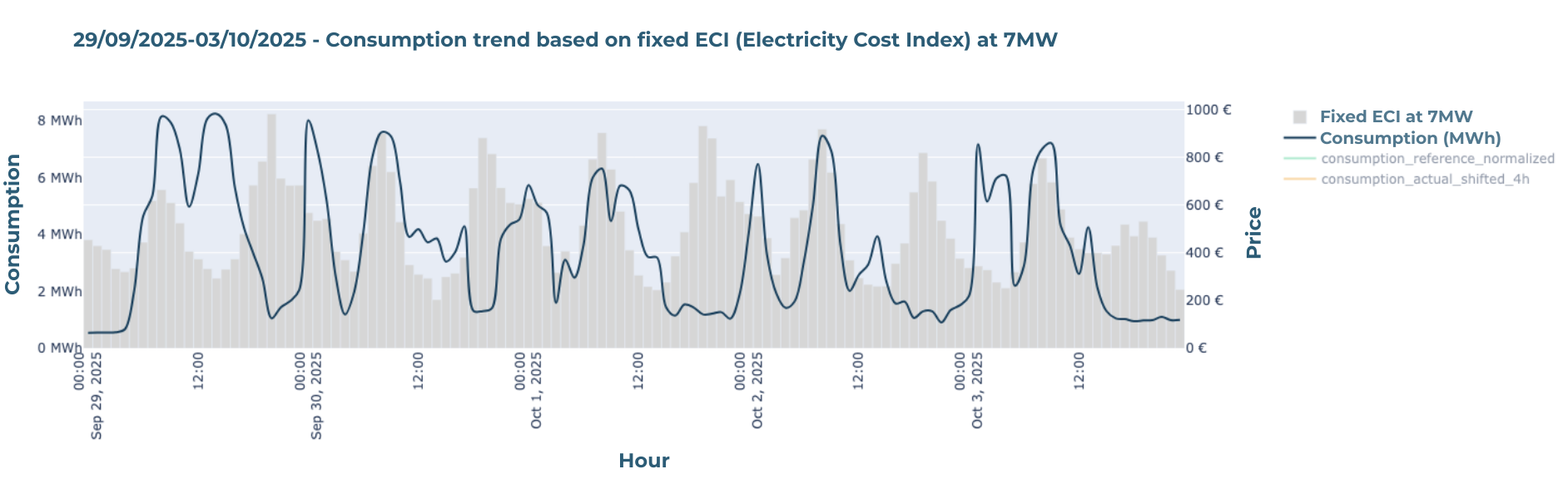
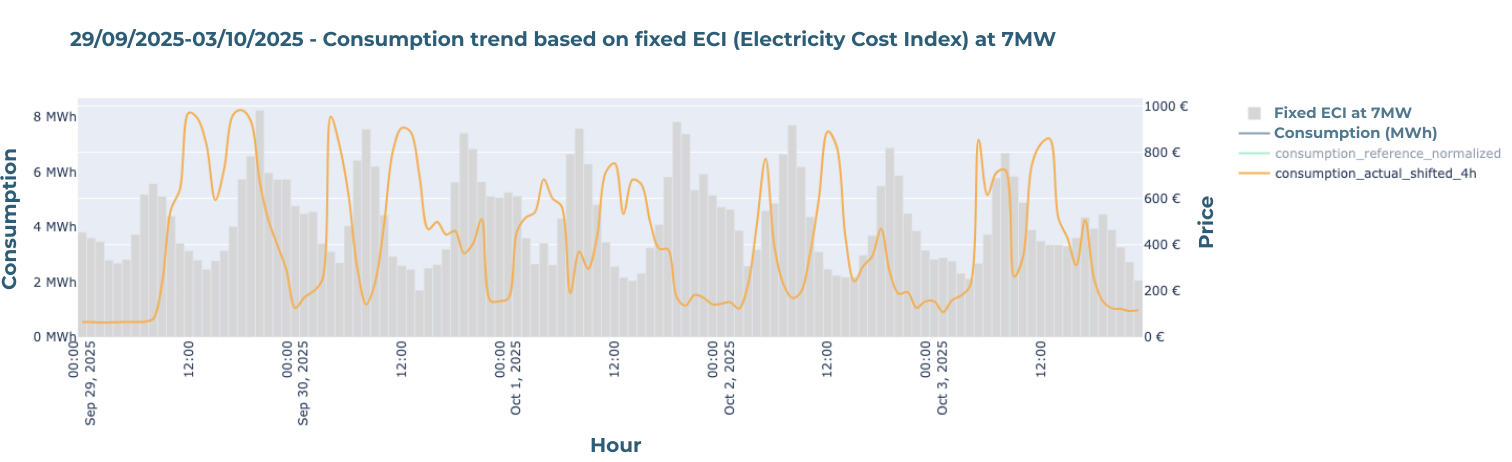
Here we compare the site's consumption to the electricity cost index. For example, by shifting the entire consumption profile by 4 hours, the factory saves €3,200 over the week.
Risk #3: An organizational disconnect between energy and production
When electricity costs are neither transparent nor shared:
- Production does not perceive the energy impact of its choices.
- Energy is seen as a constraint, not a lever.
- Decisions are fragmented across business lines.
This disconnect limits the collective ability to make intelligent trade-offs.
Direct impact: loss of decision-making efficiency and internal tensions.
Risk #4: Loss of budgetary control
Without detailed visibility:
- budget variances are explained too late,
- it is difficult to distinguish between market effects and operational effects,
- financial forecasts are based on fragile assumptions.
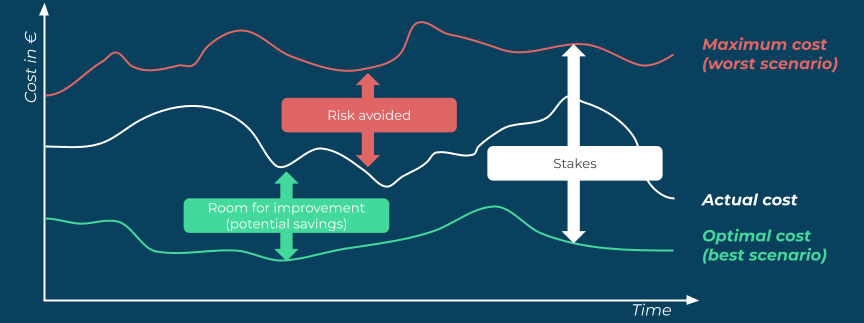
Every day, taking into account electricity market conditions, contractual specifications, power demands, and production constraints, there is always a scenario to avoid and an optimal scenario to aim for.
The gap between these two extremes is the real economic challenge. The teams' objective is therefore clear: to move closer to the optimal scenario every day by making informed operational choices without compromising industrial performance.
HIGHCAST provides this visibility.
Key factor in risk reduction: visibility
Reducing energy risk starts with a simple but fundamental capability:
- knowing the actual cost per kWh consumed,
- understanding how it changes over time and what the forecast is,
- linking this cost to production decisions,
- identifying areas where there is real room for maneuver.
This visibility transforms electricity:
- from a risk to be endured
- into a control variable integrated into industrial decisions.
Conclusion: A management issue, not just an energy issue
In the current environment, being blind to electricity costs is no longer an acceptable option for an industrial site.
Making these costs visible, understandable, and exploitable makes it possible to:
- improve the quality of production decisions,
- reduce exposure to market uncertainties,
- strengthen energy-production coordination,
- secure long-term economic performance.
The challenge is not to produce less, but to produce at the right time, at the right cost.